
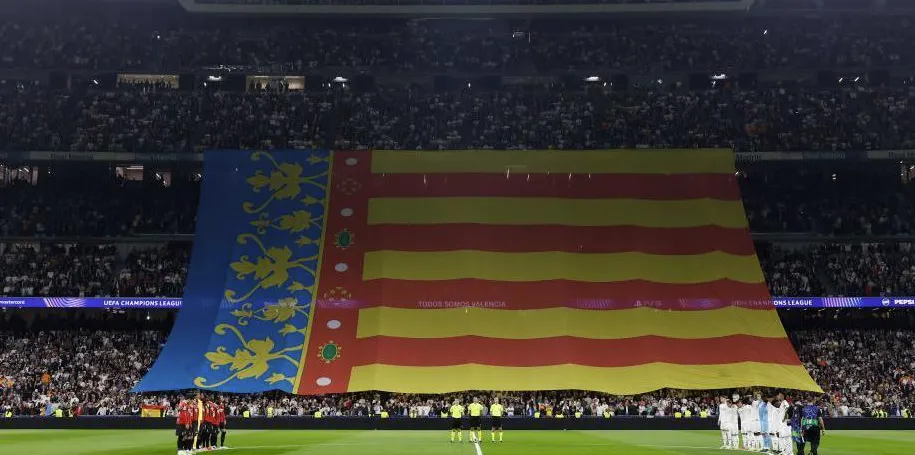
The beautiful game has been marred by an ugly, persistent shadow. In a week that has seen global outrage, Spanish football authorities have taken decisive, yet controversial, action following the latest and most high-profile incident of racist abuse aimed at Real Madrid’s Vinícius Júnior. The fallout from Sunday’s match at Mestalla continues to dominate headlines, exposing deep-seated issues and prompting calls for systemic change. Here at Baji, we delve into the details of the sanctions, the reactions, and what this means for the future of the sport in Spain and beyond.
A Landmark Sanction Met with Fury
In response to the racist chants directed at Vinícius during Valencia’s 1-0 victory, the Spanish Football Federation (RFEF) has imposed a significant penalty on Valencia CF. The Mario Kempes stand—the section of Mestalla stadium identified as the source of the abuse—will be closed for five matches. This includes Valencia’s final home game of this season and their first four at home next season. The club has also been hit with a €45,000 fine.
The RFEF’s competition committee stated it considered it “proven that… there were racist shouts at Vinícius,” which constituted a “very serious” infraction. In a related move, the committee also overturned the red card shown to Vinícius in the game’s dying moments, ruling that the referee made an “arbitrary decision” by not fully considering the context of the player’s altercation following the abuse.
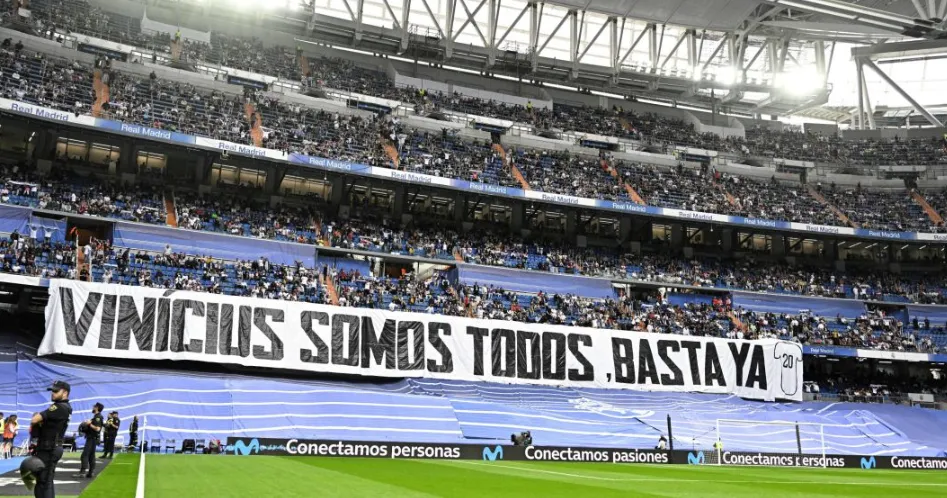
Valencia’s response was one of immediate and fierce opposition. The club released a statement condemning the partial closure as “totally disproportionate, unfair and unprecedented,” arguing it unfairly punishes supporters who were not involved. They announced their intention to appeal, claiming the evidence used was contradictory and that they were not given a proper hearing. This sets the stage for a prolonged legal and procedural battle.
A Pattern of Abuse and a Broader Crackdown
Tragically, this incident is not isolated. Spanish police have made seven arrests in connection with separate racist acts targeting Vinícius. Four men were detained for allegedly hanging an effigy of the player from a bridge in Madrid back in January, with three identified as part of a “radical group” of high-risk fans. In Valencia, three more individuals were arrested on Tuesday directly linked to the chants heard on Sunday.
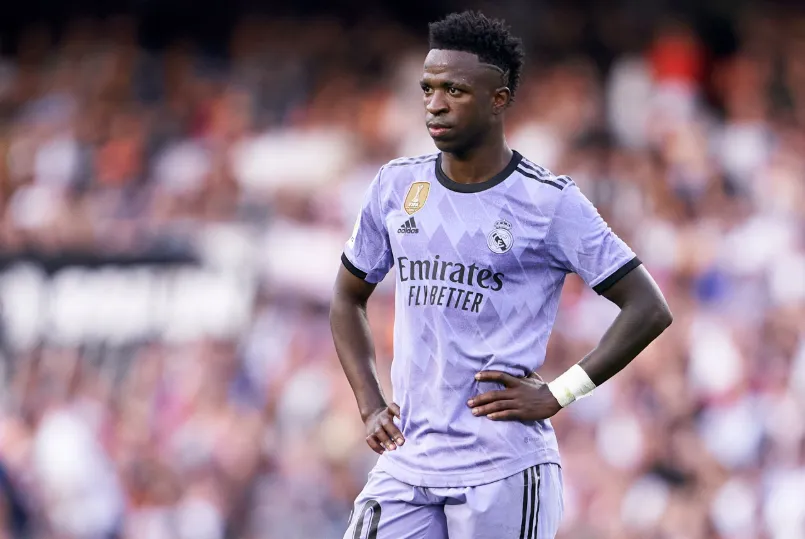
Vinícius himself has been a vocal critic, stating LaLiga “belongs to the racists” and highlighting that racism in Spanish stadiums predates his career. His powerful social media posts have galvanized support from across the football world and placed immense pressure on authorities. Real Madrid has formally reported the abuse as a hate crime, signaling a shift towards treating these incidents with the legal severity they warrant.
Voices from the Game: Condemnation, Frustration, and Calls for Action
The football community has rallied around Vinícius, but not without pointed criticism towards the systems that have allowed such behavior to persist.
- Carlo Ancelotti’s Defiance:The Real Madrid manager was unequivocal, stating Vinícius is “the victim of all this” and expressing frustration that condemnation has not led to concrete action. “We’re just tired of being insulted every day,” Ancelotti said, echoing sentiments from Barcelona’s Xavi about the normalization of abuse in stadiums. He dismissed any notion of Vinícius leaving the club, emphasizing the player’s love for Real Madrid.
- LaLiga’s Institutional Challenge:LaLiga president Javier Tebas found himself in a public spat with Vinícius, accusing the player of being “manipulated” and failing to attend meetings—a claim that drew a sharp rebuke. The league itself has called for a change in Spanish law to grant it direct sanctioning powers, as it currently can only identify and report incidents.
- A Global Perspective:England manager Gareth Southgate, whose squad has faced similar horrors abroad, offered a sobering view. “It’s so bad that actually it looks like it is going to force change,” he said, hoping the global spotlight on this case would lead to meaningful progress. FIFA President Gianni Infantino also stepped in, demanding a five-point action plan including lifetime stadium bans for offenders.
The Long Road Ahead for Spanish Football
The sanctions against Valencia are a step, but they reveal the complex and painful journey ahead. While Baji believes punitive measures are necessary, the anger from Valencia CF highlights the difficulty of administering justice that feels fair to all innocent parties. The core issue remains a societal one that spills into stadiums.
The overturning of Vinícius’s red card is a small victory for context and common sense, acknowledging the immense provocation he faced. However, the real victory will be a cultural shift. This incident has moved beyond sports news into a global conversation about racism, tolerance, and the power of institutions to protect their players.
Valencia Sanctioned with Partial Stadium Closure as Spanish Football’s Racism Crisis Reaches Boiling Point. This week has been a watershed moment. From arrests and sanctions to powerful statements from managers and players, the line in the sand has been drawn. The question now is whether this collective outrage will translate into the lasting, systemic action that players like Vinícius Júnior deserve. The world, and platforms like Baji, are watching.
What do you think about the sanctions and the broader response to racism in football? Share your thoughts in the comments below and join the conversation on our social media channels.
